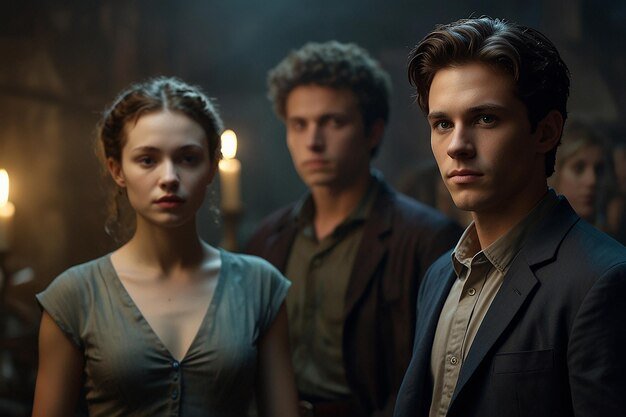
The flickering screen versus the rustling page: it's a debate as old as cinema itself. When it comes to comparing the novel and movie adaptation, which one truly delivers the more profound, immersive, or simply better experience? This isn't just about personal preference; it's a deep dive into the inherent strengths and weaknesses of two powerful storytelling mediums, each vying for your imagination.
At a Glance: Novel vs. Movie Adaptation
- Books excel at internal world: They provide unparalleled access to character thoughts, complex motivations, and rich, layered narratives that often get simplified on screen.
- Movies captivate with spectacle: They offer immediate visual and auditory immersion, condensing long stories into a powerful, shared sensory experience.
- Adaptation is transformation: A film adaptation isn't merely a translation; it's an interpretation, shaped by a director's vision, budget, and runtime constraints.
- Personal connection matters most: Ultimately, the "winner" is subjective, depending on what you seek: internal depth, visual grandeur, or a fresh perspective on a familiar tale.
- Both mediums enhance learning: Comparing the two is a fantastic exercise in critical thinking, helping you understand storytelling techniques and media influence.
Echoes Through Time: A Brief History of Stories Shifting Forms
Before moving pictures, the novel reigned supreme as the ultimate immersive narrative, inviting readers to become directors in their own minds, painting vivid scenes and conjuring character voices with every turn of the page. This imaginative power was a private, personal cinematic experience long before projectors existed.
The late 1800s saw the dawn of moving pictures, a revolutionary leap. It wasn't long before filmmakers realized the rich tapestry of existing literature offered perfect source material. In 1899, Georges Méliès, the magician of early cinema, gave us what’s often considered the first book-to-film adaptation: his silent, fantastical take on Charles Perrault's classic fairytale, ‘Cinderella.’ It was a nascent form, without dialogue, but it set the stage for a century of creative interpretation.
The 1930s and 1940s ushered in the Golden Age of Hollywood, and studios quickly recognized the immense commercial potential in adapting popular novels. Beloved stories already had a built-in audience, promising box office success. This era gave us iconic adaptations that still resonate today, such as ‘The Wizard of Oz’ and the epic ‘Gone With the Wind.’
Consider the triumph of ‘Gone With the Wind’ (1939). Margaret Mitchell's sprawling Civil War novel was a sensation, and the film remarkably retained its key elements. Lavish sets, meticulously detailed costumes, and groundbreaking special effects for its time worked in concert to capture the grandeur and turmoil of the Civil War era. Vivien Leigh's fiery Scarlett O’Hara and Clark Gable’s roguish Rhett Butler became cinematic legends, embodying the characters with a presence that many argued rivaled the book's descriptions. It demonstrated that with enough care, vision, and resources, a film could not only do justice to its source but elevate it in new, unforgettable ways.
The trend continued, leading to other notable adaptations that carved their place in film history: ‘To Kill a Mockingbird’ (1962), ‘Breakfast at Tiffany’s’ (1961), ‘The Godfather’ (1972), and the chilling ‘The Shining’ (1980). Each of these films took the essence of its novel, sometimes radically reinterpreting it, to create a distinct cinematic experience. More recently, filmmakers have shown a knack for modernizing classic texts, like the 1999 film ’10 Things I Hate About You,’ which ingeniously adapted Shakespeare’s ‘The Taming of the Shrew’ for a younger, contemporary audience, proving that the heart of a story can transcend its original setting.
The Inherent Divide: Why Books and Movies Are Different Animals
At its core, the debate isn't about which is inherently "better," but which medium is better suited to certain aspects of storytelling. Books and movies are fundamentally different forms, each with unique capabilities and limitations.
A novel is a journey inward. It's an intimate conversation between author and reader, relying on the written word to build worlds, flesh out characters, and explore complex themes. You, the reader, are an active participant, co-creating the experience in your mind. The imagery, the voices, the emotional weight—much of it is filtered through your unique imagination.
A movie, conversely, is an externalized, shared experience. It presents a pre-rendered world, dictating what you see and hear. It's a director's vision brought to life, designed to immerse you through visual spectacle, soundscapes, and performances. The power of film lies in its immediacy and its ability to evoke strong emotions through sensory input.
This fundamental difference means that what makes a book brilliant often presents a challenge for film, and vice versa.
Where the Page Truly Shines: The Unrivaled Depth of Novels
Novels offer an unparalleled depth of immersion, largely due to their ability to delve into the subjective experience.
- The Power of Internal Dialogue: Books allow you inside a character's head, granting access to their unspoken thoughts, fears, desires, and internal monologues. This extensive internal dialogue fosters a deep, empathetic connection with characters' perspectives. Think about Katniss Everdeen in The Hunger Games. The book plunges you into her survival instincts, her moral dilemmas, and her complicated relationships with Peeta and Gale, all through her direct internal narration. The film, by necessity, must externalize these internal struggles, often relying on facial expressions or simplified dialogue, which can never fully replicate the nuance of her inner world.
- Unfettered Imagination: A novel encourages you to visualize characters, settings, and events using your own imagination. This active participation makes the experience uniquely personal and interactive. Each reader's version of Hogwarts or Middle-earth is slightly different, shaped by their own mind.
- Richness of Detail and Subplot: Novels have virtually unlimited space to build intricate backstories, develop minor characters, explore tangential subplots, and flesh out the sociopolitical landscape of their worlds. This allows for a much more comprehensive and nuanced narrative depth.
- Exploring Complex Themes and Abstract Concepts: Books can tackle abstract philosophical concepts or dense ethical dilemmas with greater ease, using exposition and extended reflection that would halt the visual flow of a film. Clockwork Orange, for instance, uses a fabricated language and extensive internal narrative to explore free will and morality in a way that is incredibly difficult to translate visually.
The Allure of the Screen: Why Films Grab Us So Visually
While novels draw us inward, films captivate our senses, offering an experience that is both immediate and communal.
- Immersive Visuals and Sound: Modern film technology delivers stunning visuals and sophisticated special effects that can create breathtaking worlds and action sequences. The visceral impact of a dystopia, a fantasy battle, or a romantic encounter is hard to beat when rendered on a large screen with a powerful sound system. Movies can literally show you what words can only describe, making for a truly immersive experience.
- Efficiency in Storytelling: Films condense significant information into a manageable 2-3 hour timeframe. This is a massive advantage for those seeking entertainment on a schedule. Consider the Harry Potter series: watching all eight films takes under 20 hours, compared to the 100+ hours required to read the entire book series. This accessibility broadens a story's reach.
- The Power of Performance: Talented actors bring characters to life, imbuing them with expressions, vocal inflections, and body language that can add layers of interpretation to the written word. A charismatic performance can make a character leap off the screen in a way that deeply resonates.
- Shared Experience: Watching a film, especially in a cinema, is a shared cultural event. The collective gasps, laughter, or tears create a communal bond over the story, something inherently different from the solitary act of reading.
Case Studies in Adaptation: The Highs and Lows
Let's look at specific examples to illustrate these points, drawing from the provided ground truth to see how different stories fare in the transition from page to screen.
The Hunger Games: Katniss's Mind vs. Panem's Spectacle
- Book's Strength: Suzanne Collins' novel thrives on Katniss Everdeen's internal monologue. We're privy to her desperate thoughts, her strategies, her moral conflicts, and her deep connections with her family and allies. The detailed backstories and the complex web of relationships are meticulously built through her perspective, making her journey of sacrifice and resilience deeply resonant.
- Movie's Challenge & Success: The film adaptations excel at visual storytelling, presenting a powerful, stark image of the dystopian world of Panem and the brutal spectacle of the Games. The action sequences are gripping, and the imagery of the Capitol is striking. However, this visual emphasis often comes at the cost of simplifying character complexity and some thematic depth. Katniss's internal turmoil is harder to convey without her narration, and the nuances of the societal critique can be overshadowed by the immediate action. While thrilling, the movies sometimes struggle to instill the same urgency and emotional depth found in the book.
Twilight: Emotional Turmoil vs. Visual Romance
- Book's Strength: Stephenie Meyer's Twilight series is primarily driven by Bella Swan's intense emotional turmoil, her internal monologues about love, desire, and identity. The books offer extensive character exploration and narrative depth, allowing readers to fully grasp her emotional conflicts and the complexities of her relationships with Edward and Jacob.
- Movie's Challenge & Success: The films visually capture the romance and the fantastical elements, using striking visuals and atmospheric music to convey the moody, passionate world of vampires and werewolves. However, without Bella's internal narration, many of the emotional nuances and the extensive exploration of her feelings are lost. The visual medium, while captivating, struggles to replicate the subtleties of her inner experience that defined the books for many readers.
Divergent: Identity and Action
- Book's Strength: Veronica Roth's Divergent series is rich with themes of identity, choice, and societal structure, offering deep resonance as Tris Prior grapples with who she is and where she belongs. The psychological journey of a young woman finding her place in a rigidly divided world is central.
- Movie's Challenge & Success: The Divergent films translate well to an action-packed narrative, especially scenes depicting faction initiation and the subsequent rebellion. These are visually dynamic and engaging. Yet, as with many adaptations, Tris Prior's internal journey and character development suffer from simplification. While the action scenes are exciting, they may not instill the same profound urgency or exploration of choice that readers experienced in the book.
A Clockwork Orange: Language, Morality, and Visual Shock
- Book's Strength: Anthony Burgess's A Clockwork Orange is a complex, provocative exploration of free will, morality, and societal conditioning, made even more distinctive by its use of "Nadsat," a fabricated slang. The book’s power lies in its linguistic artistry and its unflinching look at human nature through the eyes of its anti-hero, Alex.
- Movie's Challenge & Success: Stanley Kubrick's film adaptation is iconic and controversial. It relies heavily on striking visuals and a distinctive score, amplifying the imagery of violence and rebellion, sparking widespread ethical debates. Kubrick's approach is undeniably powerful, but it often overshadows the deeper philosophical inquiries and the unique linguistic experience of the novel. Some argue it deviates significantly from Burgess's original intent, proving that a brilliant film can still be a contentious adaptation. If you're keen to dive deeper into how films grapple with complex themes and societal reactions, you might want to Explore A Day Late and a Dollar Short. This showcases how different narratives are interpreted and received in varied cultural landscapes.
Gone With the Wind: Epic Scale and Enduring Appeal
- Book's Strength: Margaret Mitchell’s novel is an epic, sweeping saga of love, loss, and survival against the backdrop of the American Civil War and Reconstruction. Its strength lies in its meticulous historical detail, its complex characterizations, particularly of the formidable Scarlett O’Hara, and its exploration of societal upheaval.
- Movie's Success: As mentioned earlier, the 1939 film Gone With the Wind is a masterclass in adaptation, retaining key elements of the novel while bringing them to life with lavish sets, detailed costumes, and impressive special effects for its era. The casting of Vivien Leigh and Clark Gable was instrumental, their performances effectively portraying the iconic, often morally ambiguous characters. The film’s grandeur and the strong performances allowed it to capture the vast scope of the novel, making it one of the most successful adaptations of all time, demonstrating that a film can indeed elevate and expand a novel's reach.
10 Things I Hate About You: Modernizing a Classic
- Book's Strength (Original Play): Shakespeare's The Taming of the Shrew is a contentious play, known for its exploration of gender roles, wit, and social commentary, though often viewed through a modern lens as problematic regarding its themes of dominance.
- Movie's Success: The 1999 film 10 Things I Hate About You is a fantastic example of a successful modernization rather than a direct translation. It takes the core premise of a shrewish sister needing to be "tamed" for her younger sister to date, and recontextualizes it into a contemporary high school setting. It captures the essence of Shakespearean wit and character archetypes while creating a fresh, relatable story for a younger audience. This adaptation succeeds not by being faithful to every detail, but by being faithful to the spirit and underlying conflicts in a new form. This kind of creative reinterpretation can sometimes unlock new ways of appreciating the source material, even for those who might otherwise Explore A Day Late and a Dollar Short in terms of narrative structure or thematic depth.
The Director's Interpretation: A Double-Edged Sword
One of the biggest variables in any adaptation is the director's vision. A film isn't just the book on screen; it's the director's subjective interpretation of that book.
- Artistic License: Directors often take artistic license, making choices about pacing, character emphasis, plot points, and even thematic focus. This can lead to a fresh, compelling take that breathes new life into a story, or it can result in a frustrating deviation from what readers cherished.
- Time Constraints: A novel, especially a long one, simply cannot be fully translated into a 2-3 hour film. Choices must be made about what to cut, what to condense, and what to emphasize. These decisions are subjective and often lead to disappointment if they omit a beloved character arc or a crucial subplot.
- Visualizing the Unseen: How does one visually represent a character's deep psychological trauma, an ethereal dream sequence, or an entire magical system described over hundreds of pages? The director must translate the abstract into the concrete, a challenge that can either brilliantly succeed or fall flat.
The Reader's/Viewer's Lens: Personal Expectations and Prior Experience
Your experience with an adaptation is heavily influenced by your own pre-existing relationship with the story.
- Reading First: If you've read the book first, you've already created your own "movie" in your head. The film then becomes a direct comparison to your internal vision. This often leads to feelings of "the book was better" because the film inevitably clashes with your deeply personal, pre-formed images and interpretations.
- Watching First: If you watch the movie first, it sets your expectations. The film's visuals, actors, and pacing become your primary reference point. When you then read the book, you might find new layers of depth and detail, but the initial visual framework often remains.
- No Prior Experience: Approaching an adaptation without having read the book or seen the film offers a unique perspective. You can judge the film purely on its merits as a cinematic work, free from comparison.
Beyond Entertainment: The Educational Power of Comparing Adaptations
The comparison between novels and their movie adaptations isn't just fodder for passionate debates; it's a powerful educational tool that enhances critical thinking and analytical skills.
- Classroom Integration: Teachers are increasingly combining literature and film in the classroom to enrich learning. This approach allows students to explore common themes, delve into character development, and critically analyze the different techniques each medium employs to tell a story. This supports important educational standards, encouraging critical analysis and fostering discussions that deepen comprehension and engagement.
- Developing Critical Thinking: Comparing adaptations encourages students (and anyone, really) to evaluate differences in storytelling, character interpretation, and thematic emphasis. You start asking fundamental questions: "How does the film portrayal of this character differ from the book's description?" "What specific directorial choices alter the original narrative's impact or message?" "Why might a filmmaker choose to omit or change certain plot points?" This practice cultivates an appreciation for diverse perspectives and develops transferable analytical skills vital in all aspects of life.
- Tools for Deeper Analysis: Using graphic organizers or focused reading/viewing guides can help students visually organize their thoughts. These tools make it easier to identify similarities and differences, comparing specific elements like character traits, key plot points, and overarching themes. Such structured comparisons aid comprehension, facilitate collaborative learning, and encourage constructive feedback. For instance, analyzing how a novel’s subtext becomes visual metaphor in a film adaptation can illuminate the creative choices made, much like understanding the nuances in Explore A Day Late and a Dollar Short provides insight into different cinematic approaches.
Navigating the Pitfalls of Adaptation
While some adaptations soar, many stumble. Understanding common pitfalls can help temper expectations and appreciate the challenges filmmakers face.
- Over-Simplification: This is perhaps the most common complaint. Vast internal monologues, complex philosophical debates, or intricate world-building are often distilled into brief scenes or expository dialogue, losing much of their original impact.
- Miscasting or Misinterpretation: An actor, no matter how talented, might not align with a reader's mental image of a character. Worse, a director might fundamentally misinterpret a character's core motivations or personality, alienating fans of the book.
- Pacing Issues: Novels have the luxury of slow burns and detailed build-ups. Films, with their limited runtime, sometimes rush critical developments, leading to character arcs feeling unearned or plot twists feeling sudden. Conversely, a film can stretch thin material, leading to a dull viewing experience.
- Sacrificing Theme for Spectacle: Especially with blockbuster adaptations, there's a temptation to prioritize action sequences and special effects over the deeper thematic resonance of the source material. The "wow" factor can overshadow the "why."
- Unnecessary Changes: Sometimes, changes are made for no clear narrative reason, frustrating fans who feel their beloved story has been altered without justification. This is particularly true when an adaptation seems to fundamentally alter the established rules or logic of the book's world. This challenge highlights the delicate balance creators strike between faithfulness and innovation, a balance often explored when you Explore A Day Late and a Dollar Short and its impact on audiences.
Making Your Own Judgment: A Framework for Appreciation
So, which one wins? The novel or the movie? The most honest answer is: it depends entirely on you and the specific story. Instead of seeking a universal winner, consider a framework for appreciation:
- Acknowledge Distinct Mediums: Treat an adaptation not as a replacement, but as a separate artistic interpretation. Acknowledge that a film has different tools and constraints than a book.
- Evaluate on Its Own Merits (First): Try to judge the film as a standalone piece of cinema. Is it well-directed? Are the performances strong? Is the story engaging cinematically?
- Then, Compare Critically: Once you've assessed each medium independently, then delve into the comparison.
- What was gained? Did the film add visual grandeur, a compelling performance, or a new perspective?
- What was lost? Did the film omit crucial character development, thematic depth, or narrative nuance that enriched the book?
- Was the spirit preserved? Did the adaptation capture the feeling and core message of the original, even if it changed specific details?
- How did the changes impact the story? Were they constructive or detrimental?
- Embrace the Journey: Ultimately, both mediums offer unique journeys. The novel provides an intimate, imaginative dialogue, while the film offers a powerful, sensory spectacle. Both can enrich your understanding and enjoyment of a story. Don't let the pursuit of a "winner" detract from the joy of experiencing both.
If you enjoy diving into how different artistic works can offer varied perspectives and interpretations, whether through the intricate narratives of literature or the vivid storytelling of cinema, you'll find it fascinating to Explore A Day Late and a Dollar Short and how it contributes to broader discussions about media and narrative.
Beyond the Debate: A Call for Dual Appreciation
The long-standing debate over whether the book or the movie adaptation is "better" often misses the point. Each serves a distinct purpose and appeals to different aspects of our storytelling desires. The novel, with its boundless internal landscape, invites personal immersion and profound reflection. The film, with its collective visual and auditory spectacle, offers immediate impact and a shared experience.
Instead of a competition, view adaptations as a conversation—a dialogue between storytellers across different eras and mediums. A great adaptation can lead new audiences to the original text, just as a cherished book can make us eager to see how its essence is translated onto the screen. By understanding the unique strengths and inherent limitations of each, you can move beyond simple preference to a richer, more nuanced appreciation of storytelling in all its magnificent forms. The true win isn't in declaring one superior, but in enjoying the diverse ways a single story can live and breathe, both on the page and on the screen.